
FRT-15 Trigger Guide: How It Works, Legality, and Installation Tips
The frt-15 trigger is a forced-reset trigger system that transforms a standard semi-automatic AR-15 platform into a high-speed shooting mechanism by mechanically returning the trigger forward before the shooter’s finger finishes its natural reset. This design allows you to maintain a stable firing grip while delivering rapid, repeatable shots with minimal finger movement, turning your rifle into a precision tool for speed and control. With the frt-15 trigger, your follow-up shots become almost instinctive, giving you a decisive tactical advantage in any drill or defensive scenario where split-second performance matters. To use it, simply install it into a compatible lower receiver, keep your trigger finger pressed firmly against the trigger, and let the system’s forced reset do the work—no special technique or modification beyond the trigger itself is required.
What Is an FRT-15 Trigger and How Does It Change Your Shooting Experience?
The FRT-15 trigger replaces your standard semi-auto trigger pack with a mechanism that uses the bolt’s forward motion to reset the sear instantly, letting the hammer drop again the moment the carrier returns to battery. In practice, your trigger finger stays pressed, and the rifle fires as fast as the bolt cycles—transforming your shooting experience from deliberate single shots into a rapid, rhythmic pulse that mimics full-auto without modifying the firearm’s internal gas system. You feel the subtle bump of each reset through the grip, and your focus shifts from pulling to riding that continuous wave of recoil. This changes your shooting experience by demanding a firmer stance and controlled breathing, because the FRT-15 trigger rewards patience over speed—once you trust the reset, your groups tighten as you stop anticipating the break and instead let the rifle run.
Understanding the Core Mechanism Behind the Forced Reset Trigger
The FRT-15 trigger’s forced reset mechanism boils down to a clever use of the bolt’s rearward travel. As the bolt cycles back after firing, it physically pushes the trigger shoe forward, resetting the sear before your finger even finishes its rearward press. This means forced reset trigger super safety the trigger’s internal lever, not a spring alone, does the work—so the moment the bolt slams home, the sear is already re-engaged. You only need to release a few millimeters of pressure, then pull again. That tiny reset window is what lets you fire as fast as you can manage the short, repetitive squeeze, without the long, mushy reset of a standard trigger.
In short, the FRT-15 uses the bolt’s kinetic energy to pre-reset the sear, shrinking your trigger’s recovery time to near zero for rapid-fire follow-ups.
Key Differences Between an FRT-15 and a Standard Semi-Auto Trigger
The core difference between an FRT-15 and a standard semi-auto trigger lies in the reset cycle. A standard trigger forces your finger to fully release and re-engage for each shot, creating a distinct, slow break. The FRT-15, however, uses a lever-driven mechanism that violently snaps the trigger forward immediately after the hammer falls, while your finger remains depressed. This transforms your pull into a rhythmic, high-speed cycling action. Instead of a deliberate squeeze, you feel a rapid, aggressive pulse. Practically, this means your trigger finger becomes the rate limiter, not the bolt carrier group, allowing shot placement to blur into a rapid string of fire. The trigger pull weight also feels radically different, as the forward reset provides a tactile kick that a mil-spec trigger lacks.
- Interface: Standard triggers require a full finger lift; the FRT-15 only needs your finger to stay still while the shoe pushes forward.
- Reset speed: A standard reset is slow and mushy, while the FRT-15’s reset is nearly instantaneous and forceful.
- Shot cadence: A standard trigger fires one round per deliberate pull; an FRT-15 fires each round from a continuous, non-released trigger press.
How to Install an FRT-15 Trigger in Your AR-15 Platform
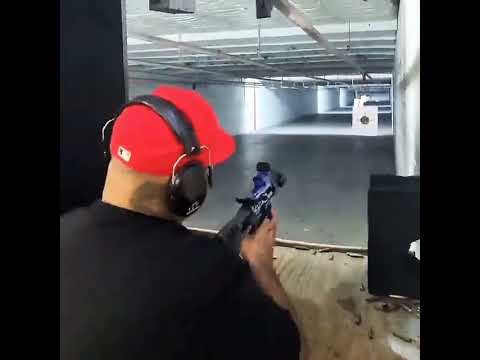
Unboxing the **FRT-15 trigger** feels like handling a precision instrument, but the install demands patience. First, ensure the lower receiver is clear of all other fire control group components—hammer, disconnector, and standard trigger must be completely removed. You’ll notice the FRT-15’s unique curved sear and spring-loaded reset lever, which replace the typical trigger group with a single, self-contained cassette. Drop it into the pocket with the selector-oriented pin holes aligned, then push the trigger and hammer pins through from left to right, using a roll pin punch to seat them flush. Unlike standard triggers, you cannot swap the hammer spring orientation; the FRT-15’s captive spring system is non-negotiable. Finally, cycle the charging handle dry several times, listening for the metallic click of the bolt resetting the sear—if the hammer follows the bolt forward, your pins are misaligned.
The real trick is torquing the grip screw just under 25 inch-pounds; over-tightening flexes the lower, causing the trigger’s trip lever to drag against the magazine well.
A perfect install ends with a smooth, two-stage pull and a violent, forced-reset reset that feels like a heartbeat under your finger.
Tools and Step-by-Step Setup for a Drop-In Fit
For a drop-in FRT-15 trigger setup, you only need a few tools: a punch set (preferably brass), a small hammer, and a bench block or vise. First, ensure the lower receiver is clear and the hammer is down. Use the punch to drift out the rear takedown pin, then pivot the upper off. Place the lower on the bench block; with the safety selector set to “fire,” use the punch to push out the trigger and hammer pins from left to right. Remove the standard trigger group. Now, lower the FRT-15 unit into the pocket, aligning its sear and hammer precisely—do not force it; if it resists, re-check the pin holes for debris. Insert the new pins, then test the trigger’s reset by cycling the charging handle manually before reassembling the upper. Finally, function-check the drop-in fit with a snap cap.
Common Installation Mistakes That Cause Malfunctions
The most frequent cause of FRT-15 trigger malfunctions is an improperly seated trigger pin, rare breed trigger which creates binding and prevents the hammer from resetting. Failing to fully compress the hammer spring during installation leads to a weak trigger pull or a dead trigger on the first shot. Another common error is installing the disconnect spring upside down, causing the trigger to stick in the rearward position. Additionally, using incorrect anti-walk pins or overtightening them will pinch the receiver and restrict the trigger’s travel. Finally, neglecting to verify that the selector detent is properly aligned can cause the safety to become stuck, mimicking a trigger failure.
Misaligned pins, inverted springs, or over-tightened screws are the primary installation errors that cause FRT-15 failures.
How to Properly Shoot with an FRT-15 Trigger for Maximum Control

To maximize control with an FRT-15 trigger, reset your trigger finger fully forward after each shot, letting the sear engage before applying pressure again—this prevents “slapping” the trigger and keeps the muzzle from dipping. Grip the rifle firmly with your support hand pulling rearward into your shoulder, creating a stable platform that absorbs the fast cyclic recoil. Focus on a high, tight cheek weld and keep your eyes locked on the front sight post, not the target, to track follow-up shots. Drive the firearm forward with your support arm, resisting the natural tendency to flinch. Breathing control is secondary; instead, rhythm dominates — exhale fully and shoot in a consistent, relaxed cadence. Q: What’s the biggest mistake? A: Gripping too hard, which causes tremor; use 70% pressure from your support hand. Practice dry-fire, scar frt trigger then live-fire in short bursts, letting the trigger’s reset become muscle memory for flat, controlled strings.
Mastering the Finger Placement and Reset Timing
Mastering the finger placement and reset timing with an FRT-15 trigger begins by seating the pad of your index finger precisely at the distal crease, avoiding the joint’s tip to prevent drag. Keep your trigger finger relaxed and perpendicular to the receiver, as tension pulls shots off-axis during rapid cycling. Reset timing for the FRT-15 demands a deliberate, short release—allow the trigger to travel forward only until you feel the tactile click of the sear re-engaging, then immediately press again. Do not fully extend your finger or lift it off the shoe; this adds milliseconds and disrupts your rhythm. Emulate a high-speed metronome, syncing your press with the bolt’s forward stroke, not the report of the shot. Your trigger finger must remain in constant, featherlight contact with the reset point, letting the mechanism’s spring return do the work rather than your own muscle motion. Practice this cadence slowly, verifying that each shot breaks without shifting your grip.
Drills to Improve Your Follow-Up Shot Speed Safely
To build follow-up shot speed safely with an FRT-15, start with slow, deliberate doubles on a paper target—pull, reset, pull—while keeping your support hand tense. Then, move to a 3-round burst drill from a low-ready, focusing on your front sight returning to the same dot before each trigger break. Use a shot timer to track your frt-15l3 split times, but cap your practice at 50 rounds to avoid flinching or grip fatigue. Add a failure drill (two to the chest, one to the head) at 7 yards, but only after you nail the cadence on a flat range with a clear backstop. Finish with a half-magazine dump into a berm, then immediately drop the mag and clear the chamber to reinforce control over speed.
Q: What’s the fastest way to practice FRT-15 follow-up speed without risking a negligent discharge?
A: Dry-fire with snap caps first—ten reps of trigger reset and reset. Live-fire only after you can keep the muzzle on a 4-inch target for 1 second flat, and always sweep your area for people before starting.
What Are the Practical Benefits of Using an FRT-15 Trigger for Range and Home Defense?
The FRT-15 trigger delivers a tangible edge in rapid target engagement, letting you fire follow-up shots as fast as you can maintain sight alignment—a critical advantage for speed drills and practical range work. For home defense benefits, its forced-reset design keeps your finger in the ready position, eliminating the need to consciously release the trigger between shots, which reduces hesitation under stress. This allows you to lay down accurate suppressive fire while moving or clearing a hallway, without the weight or complexity of a full-auto system. Because it uses standard AR-15 parts, maintenance stays simple, and the crisp, consistent reset actually improves trigger discipline on slower aimed shots. The result is a single platform that seamlessly bridges high-volume range practice with serious personal protection.
Faster Target Engagement Without Losing Accuracy
The FRT-15’s forced-reset mechanism shortens the time between trigger resets, enabling rapid follow-up shots while the shooter maintains a consistent sight picture. Because the trigger finger never needs to fully release and re-press, your grip and stance remain undisturbed, reducing muzzle shift and preserving shot placement. This direct mechanical link between reset speed and sight alignment allows for faster target engagement without sacrificing shot precision, especially on multiple targets within 15 yards. The predictable reset point also minimizes trigger slap or over-travel, so each round breaks at the same position, keeping your aim point stable. Accuracy is retained because the bolt cycles independently of your trigger finger’s motion, preventing flinching or jerking that often occurs with rapid manual tapping.
Q: Does the FRT-15’s faster reset cause you to rush shots and lose accuracy?
A: No—the reset is short but consistent, so you can time each shot deliberately. The benefit is that your finger returns to the trigger wall quickly, but you still control when the hammer drops, allowing you to align sights before each break.
How the Trigger Pull Weight and Reset Affect Recoil Management
The FRT-15’s reduced trigger pull weight minimizes the muscular force required to break each shot, allowing your grip and stance to remain rigid rather than tensing in anticipation. This consistent, light press directly reduces muzzle dip because your support hand isn’t fighting a heavy, uneven wall. The short, tactile reset then permits you to keep the trigger finger barely floating, so the sear re-engages without shifting the firearm’s center of gravity. By shortening the time between reset and next break, you avoid the natural “flinching” that occurs when your finger travels a long distance. Consequently, recoil management improves through sustained shoulder contact, as the rifle’s rearward impulse is met with a stable, locked platform instead of a re-adjusted hold. The rapid, predictable cycle lets you ride the recoil arc without overcorrecting, keeping your sight picture rare breed mp5 frt flatter for follow-up shots.
A lighter pull and short reset let you maintain a fixed grip, so recoil energy is absorbed uniformly rather than disrupted by finger movement.
How to Choose Between an FRT-15 and Other High-Performance Triggers
Choosing between an FRT-15 trigger and other high-performance triggers hinges on your intended firing cadence and legal risk tolerance. Unlike a binary trigger, which fires on release, or a flat single-stage trigger offering minimal reset, the FRT-15 harnesses bolt carrier momentum to force a lightning-fast reset—prioritize it only if you demand sustained full-auto-like fire without modifying the lower receiver’s sear geometry. For precision shooting or slow controlled pairs, a drop-in match trigger with a crisp 2-pound break is superior because the FRT-15’s aggressive reset can disrupt sight alignment. Consider your ammunition: the FRT-15 requires consistent, high-pressure loads to cycle reliably, whereas a standard two-stage trigger tolerates weak .223. Ultimately, select the FRT-15 if speed dominates your shooting drill; choose a standard match trigger for accuracy or legal simplicity.
Comparing Forced Reset, Binary, and Traditional Triggers for Your Needs
When comparing forced reset, binary, and traditional triggers for your needs, the FRT-15 trigger delivers the fastest practical reset, letting you fire each round with a single pull while the forced reset mechanism physically shoves the trigger forward—unlike binary triggers that fire on both pull and release, requiring deliberate finger control to avoid accidental second shots. Traditional single-stage triggers offer simplicity and predictability, but they cannot match the FRT-15’s near-full-auto cadence without legal machine-gun status. For defensive drills or competition, the FRT-15 demands less conscious reset management than a binary, making it more intuitive under stress, though binary triggers remain preferable if you want a unique two-shot burst pattern. Your choice hinges on whether you prioritize raw speed and muscle-memory consistency over the quirky, deliberate rhythm of a binary system.
Q: Which trigger type is best for rapid, controlled follow-up shots in a practical rifle?
For rapid, controlled follow-ups, the FRT-15’s forced reset outperforms binary (which splits your mental focus) and traditional (which requires a manual release) by returning the trigger faster than your finger can naturally move, so you simply rock your trigger finger to sustain fire.

Compatibility Considerations: What Parts Do You Need to Upgrade?
Before you buy a forced reset trigger, check your platform’s compatibility first. The FRT-15 typically drops into most Mil-Spec AR-15 lowers, but you’ll often need a heavy-duty hammer and trigger pin set to prevent walk-out under rapid fire. Upgrade your buffer spring and buffer weight—a standard carbine buffer can cause bolt bounce, so a heavier H2 or H3 buffer keeps the reset cycle reliable. Also, verify your bolt carrier group has a properly radiused rear lug; some aftermarket BCGs need a slight file job to clear the trigger’s trip. Finally, consider a high-torque grip screw or anti-walk pins for extra security.
- Replace factory trigger pins with anti-walk or anti-rotation pins to avoid movement.
- Swap to a heavier buffer and spring to stabilize the forced reset cycle.
- Check bolt carrier lug clearance; modify or replace BCG if it drags.
- Ensure m249s binary trigger your lower receiver’s trigger pocket is fully Mil-Spec, not a proprietary design.
Frequently Asked Questions About the FRT-15 Trigger: Maintenance, Lifespan, and Fine-Tuning
Owners frequently ask how often the FRT-15 trigger needs lubrication; the answer is every 300–500 rounds using a light grease on the cam track and sear surfaces, as dry firing accelerates wear. Lifespan typically exceeds 15,000 rounds, but replacing the hammer spring and disconnect at 10,000 prevents erratic reset. For fine-tuning, adjust the trigger shoe’s pre-travel screw to eliminate creep without reducing sear engagement below 0.030 inches—going thinner invites slam-fires. Do not polish the sear or cam, since factory surface hardness is critical; altering it causes premature failure. Always test with snap caps after any adjustment to verify reset before live ammo. The real nuance is that lubrication viscosity matters more than frequency—a thick grease slows the carrier’s return stroke, so use a thin, high-pressure lube specifically at the trip lever pivot. If you notice double-fire, immediately back out the pre-travel screw a quarter turn and re-check gap.

How to Clean and Lubricate the Forced Reset Components for Reliable Function
To maintain reliable forced-reset function, begin by field-stripping the trigger and removing all carbon fouling from the reset cam, trip lever, and disconnecter with a nylon brush and solvent. Avoid abrasive tools that alter sear geometry. After drying, apply a thin, high-pressure grease specifically to the cam track and pivot points—not oil, which migrates and allows metal-on-metal wear. Cycle the hammer manually 20 times to distribute lubricant evenly. Reassemble and test for a crisp reset. If sluggishness persists, re-clean and re-grease; never over-lubricate, as excess attracts debris and causes sluggish cycling.
Q: How often should I clean and lubricate the forced reset components?
A: Clean and lubricate every 500–800 rounds or after heavy carbon buildup, and always after exposure to moisture or extreme grime.
What Ammo and Buffer Weights Work Best to Prevent Short Strokes
To prevent short strokes with the FRT-15, prioritize **standard-pressure M193 or M855 5.56 ammunition** with a consistent powder burn, avoiding underpowered steel-case or reduced-recoil loads that fail to cycle the bolt fully. Pair this with an H2 buffer (4.6 oz) for carbine-length gas systems, or an H1 buffer for mid-length systems, as heavier buffers absorb excess carrier speed without starving the action of required recoil impulse. Test a 3.25 oz lightweight carrier only if your gas port is clean and ammo is hot; otherwise, stick to factory-weight carriers. Tune iteratively: if bolt locks back on an empty mag, reduce buffer weight by one step; if it short strokes, increase buffer weight or switch to a higher-pressure load.
Use M193/M855 ammo with an H2 (carbine) or H1 (mid-length) buffer, then adjust weight based on bolt-lockback results to reliably prevent short strokes.
